
UNEP: Used Heavy- Duty Vehicles and the Environment: A Global Overview of Used Heavy-Duty Vehicles: Flow, Scale and Regulation
Click here to download the report from UNEP.
This Used Heavy- Duty Vehicles and the Environment: A Global Overview of Used Heavy-Duty Vehicles: Flow, Scale and Regulation report analyses the flow and scale of used heavy-duty vehicles (HDVs) from three major used HDVs exporters – Japan, the European Union (EU) and Republic of Korea (ROK). It also reviews the regulatory environment for used HDVs import in 146 countries, 122 of which are low- and middle- income countries (LMICs).
The major exporters of HDVs (used & new) are the EU, Japan, Republic of Korea (ROK), Mexico, the US, and China. However, while China manufactures 67% of global HDVs, its share of used HDV exports was only 8% in 2020. This is changing rapidly as the policy to expand used vehicles exports is being implemented and from 2022 more than 30 cities in China have been approved to export used vehicles globally. The EU on the other hand exported about 46% of used HDVs (2020) while contributing to about 6% of global HDVs manufacturing. Thus, while the worldwide HDV manufacturing market shifted from Western Europe and North America to emerging economies in the last two decades, used HDVs exporters are primarily high-income economies.
Carbon Tracker: How Electric Vehicles can rise in the Global South
Click here to download the report from Carbon Tracker.
Unlocking the economic potential from vehicle electrification
The global deployment of Battery Electric Vehicles (BEVs) is geographically split; the passenger vehicle fleet in the Global North is rapidly decarbonising through deployments of zero tailpipe emission vehicles. Conversely, new and used BEV sales volumes in the Global South remain at present insignificant. This is largely to be expected in the short-term, as most new vehicle sales are in developed countries; while the Global South continues to be predominantly an export destination for used internal combustion engine (ICE) vehicles from the Global North.
This state of affairs has reduced the Global South – where new vehicle sales are limited to companies operating in the region and wealthy private individuals – to a passive role in the overall automotive market, with limited accessibility to affordable vehicles.
It’s therefore a key question, which Carbon Tracker examines in this report, about whether – as the tipping point for BEVs approaches and the associated electric vehicle technology moves down the cost curve – the Global South will have the opportunity to leapfrog the incumbent ICE regime to BEVs and play an active role in the automotive market.
There are significant barriers standing in the way of this opportunity, in part because car manufacturers who have been grounded in a fossil fuel-based transport system (and as they see new ICE sales decline in the North) may transfer their target markets for new ICE products to the South.
The Global Automaker Rating 2022: Who is leading the transition to electric vehicles?
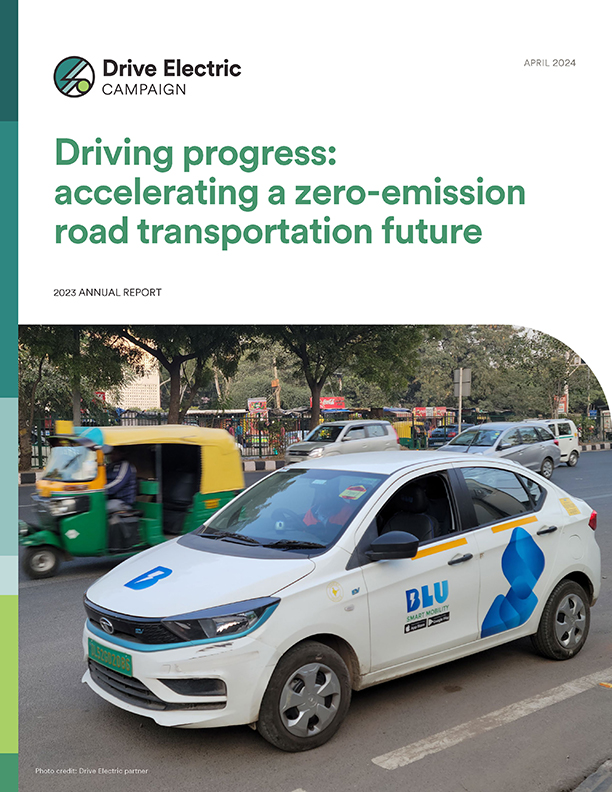
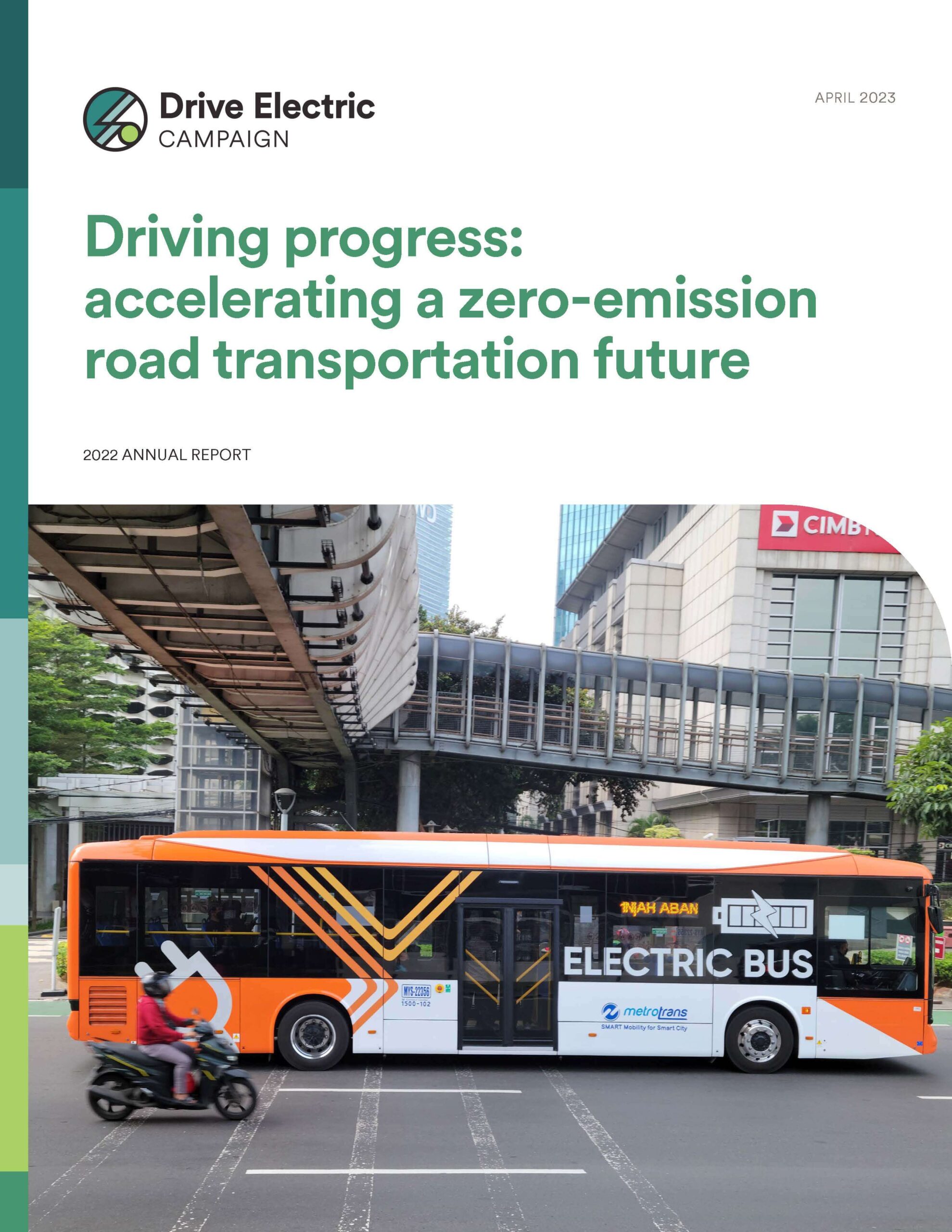
Driving Progress: accelerating a zero-emission road transportation future
2022 Zero-Emissions Vehicle Factbook: a BloombergNEF special report prepared for COP27
Freight Trucks in India are Primed for Electrification
Charging ahead: Drive Electric Campaign global progress
This summary report offers a global look at how Drive Electric partners are accelerating the transition to clean, electric vehicles of all kinds. In the European Union, a policy package called “Fit for 55” sets a 2035 phase-out date for polluting combustion engines in passenger cars and vans and the U.S. passed the Inflation Reduction Act with billions of dollars for EV and battery manufacturing and sales incentives – not only will this propel action across those regions, but it’s likely to reshape global manufacturing priorities. Meanwhile, coalitions of advocates and experts across a growing number of U.S. states are advancing policies that cut dirty diesel pollution by setting up the transition to clean, electric trucks – despite rising opposition by industry laggards. In China, electric buses, two- and three-wheeler sales data shows that, with the right policies, the market can be tipped quickly toward clean transportation, which could shift the landscape for the most popular modes of daily transportation across Southeast Asia and many emerging markets. Local action ramps up too, with Delhi, India setting ambitious electric truck targets that will ameliorate commercial vehicle air pollution, and cities across Latin America making headway on electric buses with the support of Drive Electric partners.
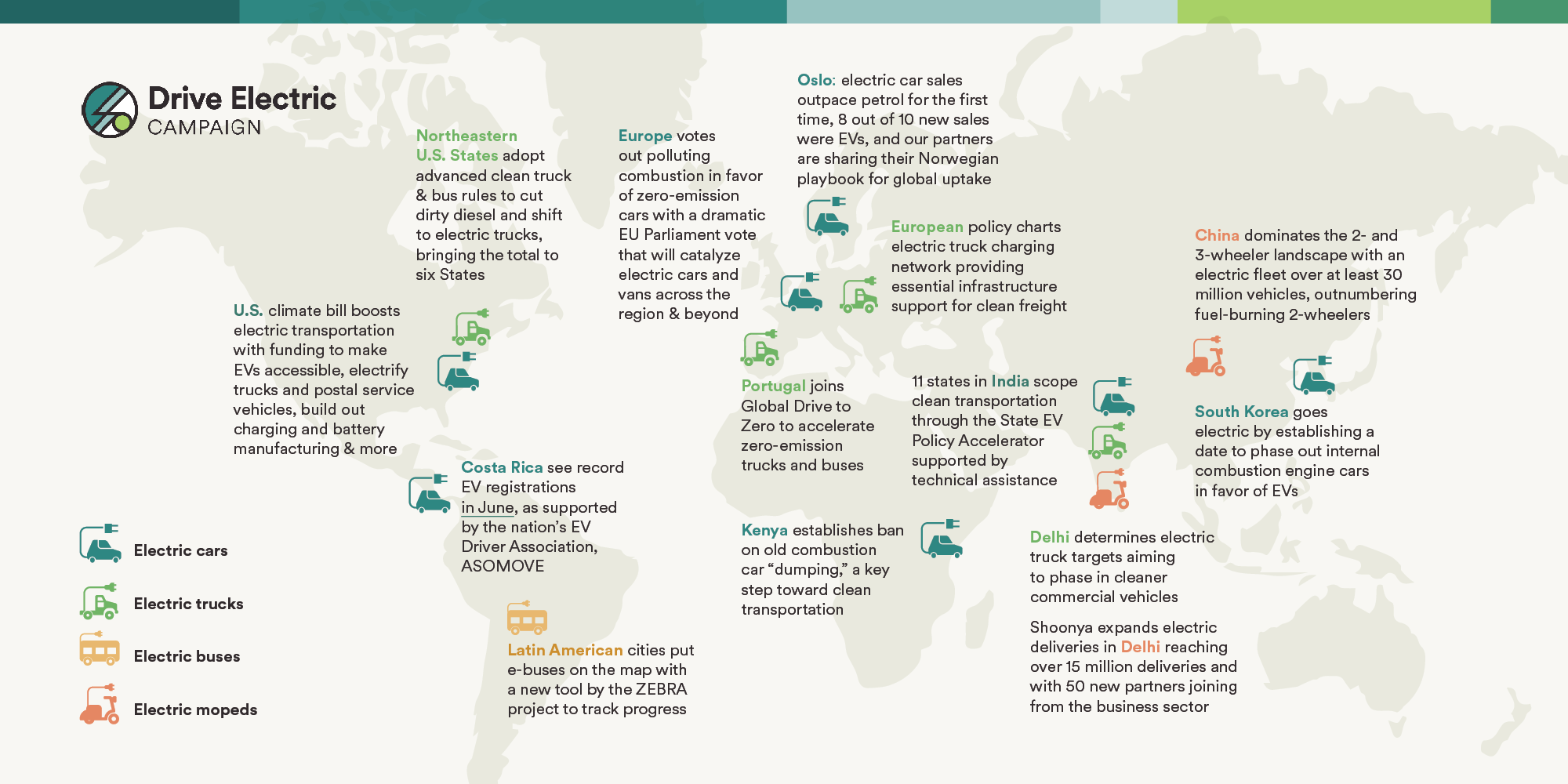
These exciting examples are just a few of the market-shifting progress that our partners make possible.
Download the report today, share your thoughts with us on social media, and learn how to get involved with the work of our partners.
Survey Says: Considerable Interest in Electric Vehicles Across Racial, Ethnic Demographics
Driving progress: accelerating a zero-emission road transportation future
People around the world are already beginning to experience clean, zero-emission transportation: from the quiet efficiency of e-buses in Latin America, to the power of pollution-free delivery e-bikes in Delhi, to the growing number of car and truck drivers saying goodbye to oil. As of the end of 2021, roughly one quarter of the world’s road transportation is committed to becoming emissions-free by or before 2050.
How did we get here? Driving Progress: accelerating a zero-emission road transportation future is now available to download, offering our first overview of the achievements of the Drive Electric Campaign global coalition.
Inside this report, we share:
- How much of the world’s road transportation demand is committed to a zero-emission future and what is being done to meet those commitments
- Why our goal is focused on the next five years to overcome the remaining barriers to scaled electric vehicle adoption
- What are some of the major breakthroughs in the second half of 2021 contributed to unprecedented growth of electric transportation
- Where Drive Electric partners are launching innovative efforts to charge ahead on electric 2- and 3-wheelers, city and school buses, medium- and heavy-duty freight, and more
Download the report today, share your thoughts with us on social media, and learn how to get involved with the work of our partners.